Generative Engine Optimization (GEO) for Amazon: Getting Cited by Rufus, Alexa, ChatGPT, and Google AI
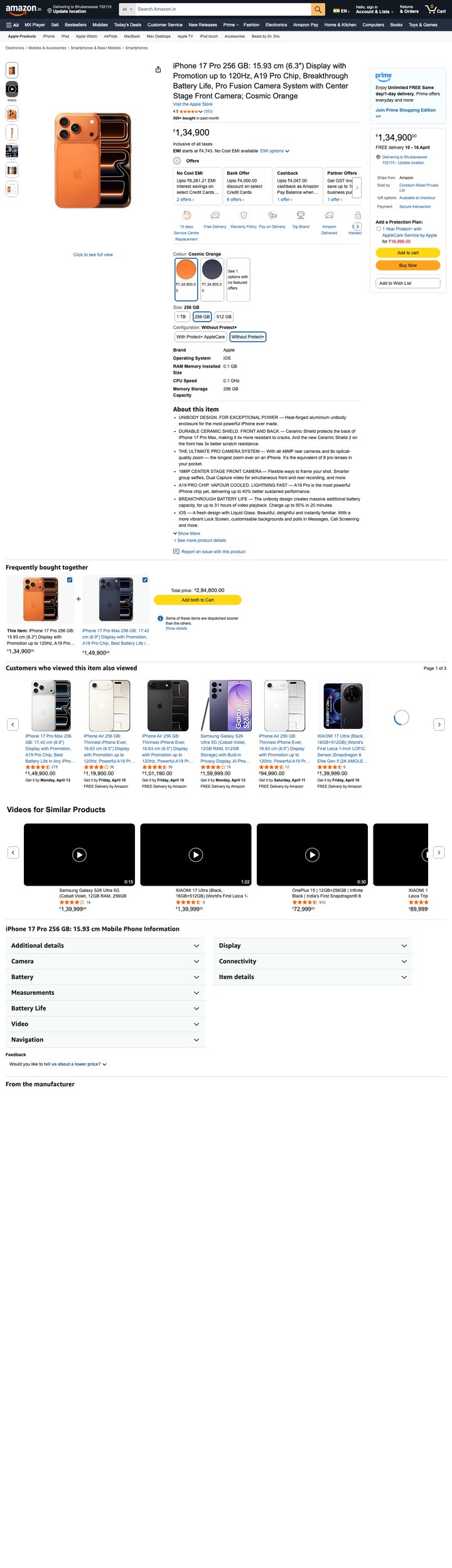 Built by zonfy in 90 seconds
↑ Real output. Try it free →
Table of contents
What GEO Is, and What It Is Not
Generative Engine Optimization (GEO) — also called GSO (Generative Search Optimization), AEO (Answer Engine Optimization), or LLM SEO depending on who you ask — is the practice of structuring your product content so AI-powered discovery systems can interpret it, trust it, and cite it accurately when recommending products.
It is not a replacement for traditional Amazon SEO. Your A10 ranking signals still drive organic placement. Your conversion rate still drives algorithmic position. Your keyword indexing still determines whether you appear for typed queries.
GEO is an additional layer that becomes load-bearing as AI assistants — Alexa for Shopping, ChatGPT, Perplexity, Google AI Overviews — increasingly mediate the shopper's path to your listing. By Q4 2025, Amazon's own data showed that Rufus alone was generating roughly $12 billion in incremental annualized sales. With Alexa for Shopping replacing Rufus in May 2026, that share is set to grow.
If your listing is invisible to these AI systems, you lose a fast-growing share of discovery volume. GEO is the work that makes you visible.
What AI Systems Actually Do With Your Listing
Three things, in order:
1. Ingest. The AI system pulls your product detail page data — title, bullets, A+ Content, attributes, reviews, Q&A — into its model context.
2. Match. When a shopper asks a conversational question, the AI parses the intent (use case, constraints, preferences) and scores candidate products by how well their content matches that intent.
3. Explain. The AI does not just return a list. It tells the shopper *why* a product is a good match, citing specific claims from your listing or reviews. "This skillet is recommended because reviews confirm it works well on induction cooktops" is a citation.
GEO is about being well-formed at all three stages: ingestible, matchable, and citable.
Try zonfy free
Generate Amazon listings in 90 seconds
Title, 5 bullets, description, backend keywords, and 7 gallery images — generated in 90 seconds. Drop straight into Seller Central.
Generate Full Listing →Your first generation is free. No credit card required.
Why Traditional Keyword Stuffing Fails
The 2015–2022 Amazon SEO playbook was keyword density: cram as many high-volume keywords into your title, bullets, and backend search terms as possible. The A10 algorithm rewarded matches; the shopper read past the keyword soup.
LLM-based systems work differently. They penalize keyword stuffing in two ways:
Semantic flattening. When your title is a chain of 12 keywords, the LLM cannot extract a clean meaning. It either picks one dominant theme and ignores the rest, or treats the whole title as low-information noise.
Citation rejection. Alexa for Shopping is designed to cite specific claims. A title that reads as a keyword list contains zero citable claims. The product does not appear in conversational recommendations.
Sellers who shipped well-optimized keyword-rich listings in 2022 are watching them lose conversational visibility in 2026. The fix is not to abandon keywords — it is to embed them in citable sentences.
The Seven Specific Moves That Matter
1. Title as a Citable Sentence
Rewrite each top ASIN's title so it reads as a single, coherent sentence. Keep the high-volume keywords, but in a structure a human salesperson would use.
Old (keyword chain): "Cast Iron Skillet 10 Inch Pre Seasoned Induction Cookware Heavy Duty Pan Indian Tawa"
New (citable sentence): "Pre-Seasoned 10-Inch Cast Iron Skillet — Works on Induction, Gas, and Wood Fire — Heritage Iron Co."
The same keywords are present. The structure rewards both A10 (keyword matches) and conversational AI (citable specificity).
2. Bullets as Question-Answer Pairs
Restructure each bullet so it implicitly answers a shopper question. This format is far more citable than traditional feature lists.
Format: "[QUESTION-SHAPED HEADER] — [Specific, citable answer]"
Five questions to target:
- Will this last?
- Is this safe for my use case?
- Does this work with [specific compatibility]?
- How easy is the [setup / cleaning / install]?
- What is in the box?
Each bullet answers one, with a specific claim — not adjective-driven marketing language.
3. Attribute Completeness Above 95%
Open Seller Central → Manage Inventory → click into a top ASIN → Product Details tab. Count blank attributes.
The threshold to be visible across the full range of conversational queries is 95%. Below 90%, you become invisible to whole categories. The fields that get cited most:
- Intended use
- Target audience
- Material (primary and secondary)
- Certifications
- Packaged quantity
- Compatibility
For listings older than 18 months, most sellers find 30–50% of attributes blank.
4. A+ Content as Citable Claim Chains
Every A+ module should make a claim that could be quoted verbatim. Generic "premium quality" or "trusted by thousands" is invisible to AI citation.
Replace abstractions with specifics:
- "Premium materials" → "A-grade cast iron, 4mm wall thickness, 5kg total weight"
- "Trusted by thousands" → "12,000+ verified reviews, 4.6-star average"
- "Built to last" → "5-year manufacturer warranty against cracking or warping"
Specific claims compound. The same numerical claim ("4mm wall thickness") can be cited across hundreds of shopper queries about durability, heft, heat retention, and quality.
5. Review Use-Case Coverage
Alexa for Shopping reads your top reviews to confirm or contradict your listing claims. If your bullet says "great for cold weather" but zero reviews mention cold weather, you do not surface for cold-weather queries.
This is the most overlooked optimization in 2026. Reviews are now eligibility data, not just social proof.
Three policy-compliant tactics:
- Plant use-case language in A+ Content. Buyers naturally echo it in reviews.
- Use Amazon's Request a Review button consistently.
- Survey buyers via the Customer Engagement tool to surface vocabulary you can mirror.
The goal is review distribution that confirms your listing's claims across the full range of shopper queries.
6. Q&A Section as Citable FAQ
The Q&A section on every PDP is heavily weighted by AI systems for citation. A well-tended Q&A section can carry as much weight as 50% of your bullet points in conversational matching.
Two moves:
Answer existing questions promptly. Within 24 hours where possible.
Seed common questions proactively. Amazon's policy allows sellers to answer their own products' Q&A when the question is publicly asked. Anticipate the top 10 questions in your category and ensure each has a thorough seller answer.
7. Off-Amazon Foundation
Some AI surfaces — ChatGPT Shopping in particular — cannot read Amazon listings at all. OpenAI's crawlers are blocked by Amazon. For these surfaces, the only path to visibility is an off-Amazon presence.
The minimal off-Amazon foundation:
- A simple Shopify store with your top 5 SKUs
- A Google Shopping feed with 95%+ attribute completion
- JSON-LD product schema on every product page
- Allow OAI-SearchBot in robots.txt
This is not a pivot away from Amazon. It is a 5–10 hour project that unlocks visibility to a fast-growing share of discovery traffic that is permanently outside Amazon's reach.
What GEO Looks Like in Practice
Take a typical mid-revenue Amazon ASIN — say, a kitchen tool at ₹1,500 with 2,000 reviews and an 8% PDP conversion rate.
Before GEO:
- Title: keyword-stuffed chain of 14 phrases
- Bullets: feature lists with "premium" / "high-quality" language
- Attributes: 42% filled
- Reviews: 2,000 reviews, no organized use-case coverage
- A+ Content: 7 modules with generic marketing language
- Q&A: 12 questions, 4 answered (one by seller, three by other shoppers)
After GEO (4 weeks of work):
- Title: clean readable sentence with same top 3 keywords
- Bullets: 5 question-answer pairs with citable specifics
- Attributes: 96% filled
- Reviews: same 2,000 reviews, but A+ Content and bullets now seed use-case vocabulary so new reviews naturally echo it
- A+ Content: 7 modules with specific claims (measurements, certifications, warranty terms)
- Q&A: 35 seeded questions, all answered by seller with thorough responses
The keyword density is similar. The citability is transformed.
The Bottom Line
GEO is not a new playbook. It is a reweighting of work most sellers already do. Title clarity, attribute fill, citable A+ Content, structured Q&A — these were all best practices in 2022. In 2026 they have become load-bearing because AI assistants now mediate a meaningful and growing share of product discovery.
The sellers who treat GEO as a separate, additional workstream waste effort. The sellers who treat it as the *quality bar* for normal Amazon SEO work — rewriting one ASIN at a time over a few months — compound visibility across every AI surface that pulls from Amazon's catalog.